Why Toasting Spices Changes Their Aroma
Why toasting spices changes their aroma: learn to use gentle dry heat, read fragrance and colour, and stop before whole spices turn bitter.
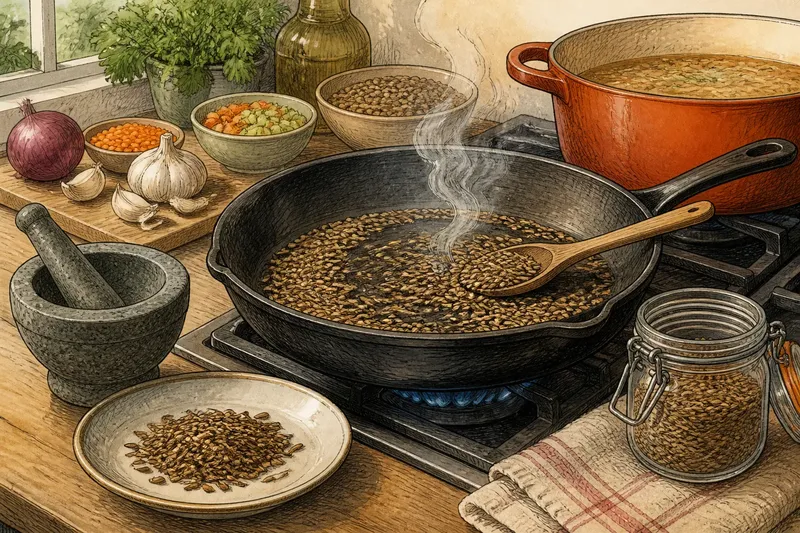
You are making lentil soup, and the cumin seeds in the jar smell dusty rather than vivid. Why toasting spices changes their aroma becomes clear when you warm a small handful in a dry pan: a grassy scent begins to rise, then turns warmer and more savoury. The change comes from heat acting on the spice’s aromatic compounds, but the same pan can carry the process too far if attention wanders.
Toasting is not simply a way to make spices smell stronger. It changes which parts of their aroma are easiest to notice, softens some raw, sharp notes and brings forward others. The useful skill is to follow those changes with your nose and eyes, then remove the spice from the heat while its fragrance is still clean.
Heat and aroma
Whole spices contain aromatic compounds that can be released or altered by warmth. Dry heat drives off some moisture and helps volatile aromas move into the air, where you can smell them. A spice may therefore seem more fragrant even though nothing has been added to it.
Different spices respond in different ways. Cumin can shift from earthy and slightly green to a deeper, toastier smell; coriander seed may develop a sweeter, citrus-like impression; mustard seeds can become more nutty. These are useful sensory descriptions, not fixed outcomes: age, storage, variety and the pan’s heat all affect what you notice.
Whole spices are usually easier to toast evenly than ground ones. Their surfaces warm gradually, giving you time to notice a change before the interior becomes scorched. Ground spices have much more exposed surface, so they can darken and turn acrid quickly; add them directly to a dish or warm them briefly in liquid or fat when a recipe calls for it.
One pan, changing scent
Say you are preparing a pot of lentil soup and want cumin to taste more rounded. Imagine a small, clearly hypothetical kitchen scene: the seeds are fresh from a closed jar, the soup ingredients are ready, and a heavy frying pan is clean and dry. You choose whole cumin because it gives a visible and fragrant cue as it warms.
Set the pan over low to medium-low heat and add the seeds in a loose layer. They should sit comfortably across the surface rather than pile into a deep mound. A heavy pan retains heat, so it can be easier to control than a thin one that heats abruptly, but the burner still needs your attention.
At first, the seeds may smell faint or grassy. Gently shake the pan or stir with a wooden spoon so they move across the warm surface; this helps prevent one area from taking all the heat. Keep your face back from the pan and waft the aroma towards you with a hand rather than leaning over it.
After a short while, the smell may become more recognisably cumin-like, with a warmer, fuller note. The seeds may deepen slightly in colour, but a dramatic colour change is not the goal. If the scent turns sharp, smoky or burnt, take the pan off the burner immediately: residual heat can keep cooking them.
In this imagined situation, you remove the seeds when their fragrance is clear and pleasant, then tip them onto a cool plate. Once they are cool enough to handle, you crush them lightly with a mortar and pestle and stir them into the soup. The expected observable result is a more distinct cumin aroma in the finished dish, not a promise that every batch will taste identical.
The plate matters because a hot pan continues to transfer heat after it leaves the burner. Think of it like a warm mug: setting it aside does not make it cool at once. Moving the seeds to a cool surface interrupts that continued cooking and makes it easier to stop at the stage you intended.
Signals in the pan
Fragrance is often the most helpful guide, but use more than one cue. A clean, rising aroma is a reason to check closely; a sudden harshness is a reason to stop. Colour offers supporting evidence, while smoke, blackened patches or a bitter smell indicate that the pan has gone too far.
- Listen for the change in scent: notice when a faint raw smell becomes warm and distinct.
- Keep the spices moving: stir or shake the pan so the seeds heat more evenly.
- Watch for a modest colour shift: do not wait for dark browning as proof that the spices are ready.
- Respond to smoke or sharpness: remove the pan from the burner rather than turning away to finish another task.
- Cool the spices off the pan: use a plate or cool bowl before crushing or storing them.
Do not rely on popping as a universal signal. Some seeds may crackle or jump, while others remain quiet even as their aroma develops. A spice’s size and structure matter, so learn the scent of the particular ingredient instead of waiting for a sound that may never come.
Choosing a heat level
Gentle heat gives you a larger window to notice change. If the pan is too hot, the outside of a seed can scorch before the aroma has time to develop pleasantly. A low or medium-low setting is a sensible starting point; lower it further if the spices darken quickly or the scent becomes harsh.
A dry pan is the simplest way to focus on the spice itself. Use a clean pan without oil or water, and avoid adding a large quantity at once, since crowded spices can warm unevenly. If a recipe asks you to toast spices in oil, that is a different method: fat carries aroma into the dish, and the ingredients around the spices affect how quickly they cook.
Toasting whole spices before grinding them can make their aroma more noticeable in a blend. Let them cool first, then grind with a mortar and pestle or a clean spice grinder. Ground spices release their aroma readily, so use them soon after grinding and keep any remainder in a tightly closed container away from heat and light.
Not every spice needs to be toasted. If a recipe depends on a fresh, sharp note, or calls for the spice to bloom briefly in oil alongside other ingredients, follow that method rather than adding a separate dry-pan stage. Ingredient labels, recipe directions and manufacturer instructions can matter for packaged products; follow them where relevant.
Questions about toasting spices?
Should spices be toasted whole or ground?
Whole spices are generally easier to monitor because they heat more slowly and show their condition clearly. Ground spices can scorch rapidly, so use them only with a method that gives them brief, controlled heat.
Can I toast several spices together?
You can combine spices that are similar in size and need comparable heating, but a mixed handful is harder to judge. Toasting them separately gives you more control when one ingredient is small or noticeably more delicate.
What if my spices smell burnt?
Take the pan off the heat and move the spices to a cool plate. If they smell acrid or taste bitter, leave them out of the dish; adding more ingredients will not reliably remove that scorched flavour.
Do toasted spices need to cool before grinding?
Yes, let them cool on a plate first. Warm spices can release aroma quickly, but grinding them while hot can make handling awkward and may encourage moisture to collect in a storage container.
Aroma before colour
Toasting spices is a small act of attention rather than a browning contest. Use whole spices when you want time to follow their changing fragrance, keep them moving over gentle dry heat, and treat colour as a clue rather than a target. For why toasting spices changes their aroma, the practical answer is in that gradual shift from raw to warmly fragrant—noticed early enough to stop before it turns harsh.
For the next dish, toast only what you need and keep a cool plate nearby before lighting the burner. That simple preparation makes the moment of stopping easier to recognise, especially when the pan’s aroma is changing faster than its colour.