Fresh, Dried or Frozen Herbs: Choosing by the Job
Fresh, dried or frozen herbs suit different cooking jobs. Choose a form that fits the dish, from a raw salad to a slow-cooked sauce, without wasting what you have.
You are halfway through making a tomato sauce when you reach for basil and find only a frozen packet and a jar of dried leaves. Fresh, dried or frozen herbs can all belong in the same kitchen; the choice depends on how you want them to contribute to the meal.
Think about the meal
Herbs carry more than flavour. They can signal a particular cooking tradition, bring a fresh contrast to a rich dish, or make a familiar meal feel complete. Choosing a form is therefore partly a question of the eating occasion: a salad asks something different of an herb than a pot left to simmer.
Fresh leaves are visible and aromatic, dried herbs settle into cooked food, and frozen herbs offer a ready-to-use option whose softened texture is usually best mixed in. The differences are a little like choosing between a handwritten note, a printed label and a message saved on your phone: each conveys something, but the setting shapes which feels right.
Fresh herbs at the table
Fresh herbs make sense when their colour, shape or fragrance will be noticed. Parsley scattered over soup, mint in a salad and coriander over beans are not just flavour choices; they are part of how the dish arrives at the table.
They also suit uncooked sauces, dressings and sandwiches, where leaves remain distinct. Rinse herbs if needed and dry them before chopping; wet leaves can make a dressing watery. A sharp knife helps keep the cut tidy, while a light hand avoids turning tender leaves into a bruised paste.
Dried herbs in cooking
Dried herbs are at home in dishes where they have time to blend in: tomato sauce, bean stew, roasted vegetables or seasoned breadcrumbs. Their papery texture is less appealing as a garnish, but once softened in oil or cooking liquid, the leaves become part of the dish rather than a feature on top.
Because dried herbs are compact, equal spoonfuls do not usually provide the same effect as fresh herbs. Begin with less dried herb than the recipe’s fresh amount, then taste and adjust. If the jar’s contents have little aroma, they may add less character; fresh or frozen herbs, or another seasoning already suited to the dish, may be a better choice.
Frozen herbs for ease
Chopped frozen parsley, dill or coriander can go straight into soup, rice, a pan sauce or a savoury filling. The leaves soften as they warm, so they are generally more comfortable stirred through a dish than arranged as a garnish.
Check the packet to see whether the herbs are loose, portioned or packed with oil. A loose product is easy to add gradually; a cube may also bring liquid or fat, which can alter a delicate dressing. For a raw salad or sauce where leaf texture matters, fresh herbs are usually more suitable.
Choose by the occasion
- For a raw salad: If distinct leaves and fresh fragrance are part of the experience, choose fresh herbs; if you have only frozen or dried, leave them out or use them in a cooked accompaniment instead.
- For a long-simmered sauce: If the herb should blend into the sauce, use dried leaves early enough to soften; if they smell faint, add a more aromatic herb or seasoning you already have.
- For soup served to guests: If you want a visible finishing touch, reserve fresh leaves for the bowls; if none are available, stir frozen herbs into the pot rather than presenting them as crisp garnish.
- For a quick weeknight meal: If washing and chopping would slow dinner, add loose frozen herbs to the cooked food; if the product is a cube packed with oil, account for that in the recipe or choose another form.
- For a savoury filling: If the herbs will be mixed through and baked, dried or frozen forms can work; if the recipe relies on a fresh, leafy contrast, use fresh herbs or serve them alongside.
- For an uncooked dressing: If a vivid green colour and fresh taste matter, chop fresh herbs into it; if you have only frozen herbs, expect a softer result and use them only if that texture suits the dressing.
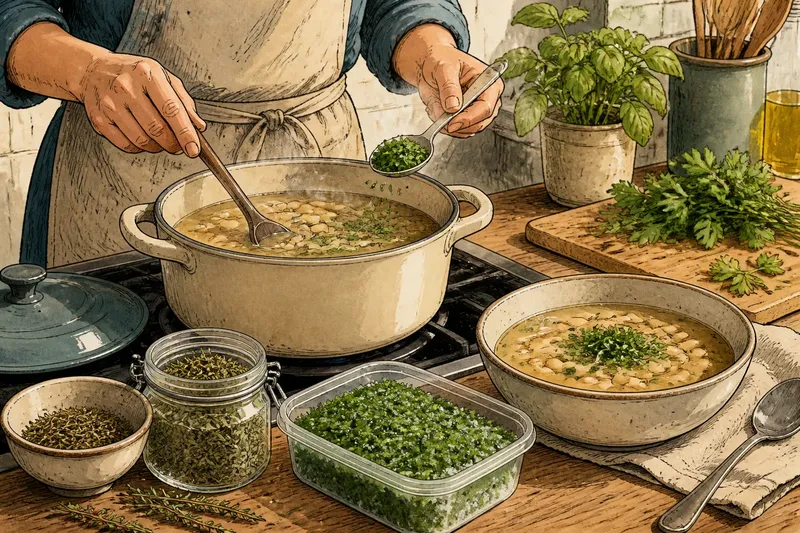
Say you are making white-bean soup with dried thyme, frozen parsley and no fresh bunch. Put a small pinch of thyme into the broth as the beans simmer, then stir in a spoonful of frozen parsley near the end; the finished soup should have a settled herbal flavour with green flecks, though the parsley will not stay crisp.
Which form suits your dish?
Can frozen herbs replace fresh ones?
They can in cooked dishes where softened leaves are unobtrusive. For salads, garnishes and raw sauces, fresh herbs usually provide a more distinct texture.
When should dried herbs go in?
Add them early enough to soften in the cooking liquid or oil. In a quick-cooking dish, allow them time to mingle and taste before adding more.
Which fresh herbs suit long cooking?
Woody herbs such as rosemary and thyme can stand up to longer cooking better than delicate leaves. For a brighter note, hold back tender herbs and add them at the table.
What if the recipe does not name a form?
Consider how the dish is served and what role the herb should play. Fresh suits a visible finish, dried works well blended into cooked food, and frozen offers an easy addition when a softer texture is acceptable.
Keep herbs in context
Herbs are part of a dish’s social character as well as its seasoning. A bowl of soup passed around the table may invite a plate of chopped parsley beside it, while a sauce cooked slowly can carry dried herbs without any separate garnish.
When deciding between fresh, dried or frozen herbs, consider what the people eating will see and taste, as well as what is available. That gives the herb a clear place in the meal and helps you choose a form that belongs there.