A Weeknight Supper Built Around One Shared Dish
A weeknight supper built around one shared dish can bring people together without a complicated menu, with a clear centre and room for different needs.
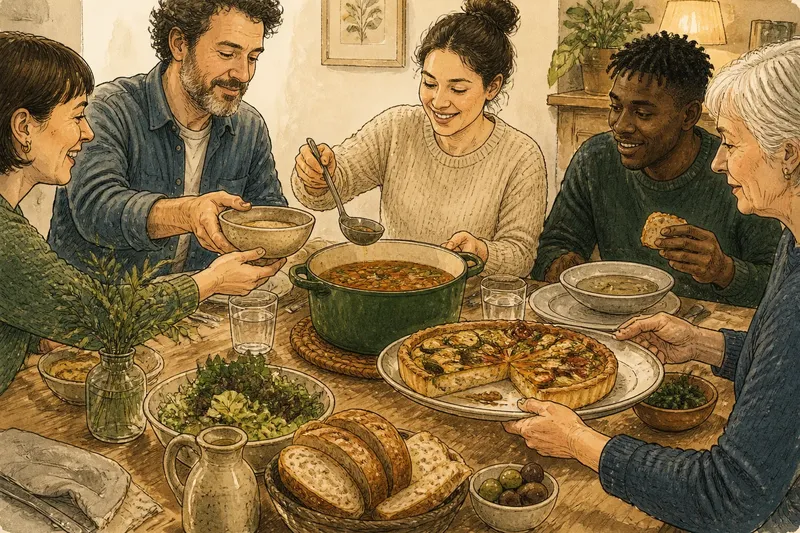
The oven timer rings as someone sets out plates and another opens a jar of olives. A weeknight supper built around one shared dish gives everyone a common place to begin, while the meal’s small rituals—passing a bowl, waiting for the last person, offering seconds—make it feel shared rather than merely served.
Make one dish communal
Choose food that can be brought to the table in its cooking vessel or on one platter: a bean casserole, a vegetable tart, a pot of soup or a rice dish. The point is not to make every diner’s plate identical, but to give the meal a centre people can gather around.
That centre also gives the evening a natural rhythm. Someone can ladle soup while another tears bread; a tart can be passed and cut as people settle in. By contrast, a meal that depends on several separate plates arriving together can keep the cook away from the table.
Let serving create connection
Shared serving works best when people can see what is available and take part without ceremony. Put the main dish within reach, provide the right utensil, and let someone ask for it to be passed. A serving spoon for a stew or a broad spatula for a tart turns the food into a small act of cooperation.
There is no need to insist that everyone serve themselves. If a guest would rather stay seated or needs help, offer to pass the dish. The invitation matters more than the method; a shared meal should make participation possible, not compulsory.
Keep the table arrangement simple enough that passing food does not become an obstacle. Place hot dishes on a stable trivet, keep drinks and cutlery nearby, and avoid crowding the centre with decorations. A shared dish is like a book passed among friends: the common object gives the gathering a focus, but each person meets it in their own way.
Make space for difference
People may eat at different speeds, want different portions or prefer a particular part of the meal. A dish served in a bowl or on a platter allows diners to choose without turning those differences into a discussion. Keep strongly flavoured sauces and optional garnishes in separate bowls if they would otherwise dominate the shared food.
Say you are serving a vegetable tart with a side of leaves. The starting point is one tart and one salad for everyone; you put the dressing in a small jug and serve the tart with a broad spatula. One guest can take a smaller slice and leave the salad plain, while another adds dressing and returns for another piece. The visible result is a meal in which everyone shares the same centre but chooses how to take part.
For allergies or other dietary needs, ask guests privately and plan the central dish accordingly. Keep ingredients that could pose a concern separate, use clean serving utensils, and explain what is in each dish; for personal medical dietary advice, consult a qualified health professional.
Keep the pace gentle
Choose a main dish that does not demand constant attention once it reaches the table. A casserole can stay in its dish, and soup can be served from its pot; a crisp salad or hot bread can arrive alongside them without requiring a parade of courses.
Set out plates, cutlery and water before the final cooking stretch. If guests arrive at different times, greet them and let the group settle rather than treating each arrival as a signal to start the whole meal again. Follow appropriate food-storage and serving guidance for dishes that need careful handling.
Small gestures help the cook join the gathering. Ask someone to carry the bread, invite a guest to choose where the salad goes, or leave room for people to pass the main dish. These ordinary tasks give others a way to contribute without adding another recipe to the evening.
Invite without pressure
A clear invitation helps guests understand the kind of meal they are joining. Mention the main dish and any relevant sides, and say plainly if you would like help setting the table. “We’re having vegetable soup and bread; come as you are, and I’ll have the bowls ready” sounds welcoming without making supper feel like an event that needs managing.
If a guest offers to bring something, suggest an easy contribution such as fruit or bread, or say that their company is enough. Ask about dietary needs before the day when possible, so the conversation is practical rather than a request for each person to design their own meal.
What makes sharing work?
What dishes are easiest to pass?
Choose food held in a stable bowl, pot or platter, such as soup, casserole, tart or roasted vegetables. Match the serving utensil to the dish so people can take a portion without awkward handling.
Should everyone serve themselves?
No. Offer the dish around, but be ready to serve someone who prefers help or cannot comfortably reach it. Sharing is about making room for one another, not enforcing a particular table custom.
How can I keep a meal welcoming?
Explain what is being served, make the table easy to use and avoid commenting on how much anyone takes. Keep optional additions apart when that lets diners make choices quietly.
What if people arrive at different times?
Choose a dish that can wait appropriately while guests settle, and avoid making each arrival restart the meal. Follow relevant food-safety guidance rather than leaving perishable food out indefinitely.
Keep the welcome visible
A weeknight supper built around one shared dish is most welcoming when the arrangement is easy to understand: the main food is in reach, the utensils are ready, and guests know they can ask for help or pass on something. Those small signals can matter more than a carefully styled table.
After supper, invite anyone who wishes to help to carry plates or put bread away, but let the gathering end at its own pace. A meal can be shared in the food itself and in the unhurried attention people give one another while they eat.